
By Your Phoenix Attorney •
What Is the Difference Between a Preliminary Hearing and a Grand Jury Indictment in Arizona?
The short answer
A preliminary hearing and a grand jury indictment are the two roads a felony case can take to Superior Court in Arizona, and the difference is who decides probable cause and whether you get a voice. At a preliminary hearing, a judge decides in open court, with your lawyer there to question the state's witness. A grand jury indictment comes out of a closed room where citizens hear only the prosecutor's side and vote without you or your lawyer present. This post covers how a felony charge gets started. What happens once you are in front of the Superior Court judge is covered in our post on what happens at an arraignment in Arizona.
Why a felony needs a probable cause finding first
A misdemeanor can go straight to court on a complaint. A felony cannot. Someone other than the prosecutor has to find probable cause first: enough evidence that a reasonable person could believe a crime happened and that you committed it. That is a low bar, nowhere near proof beyond a reasonable doubt.
Prosecutors have two ways to get that finding. They can file a direct complaint and ask a judge for a preliminary hearing, or take the case to a grand jury for an indictment. The prosecutor picks. In our experience in Maricopa County, most serious felonies go to the grand jury.
What happens at a preliminary hearing
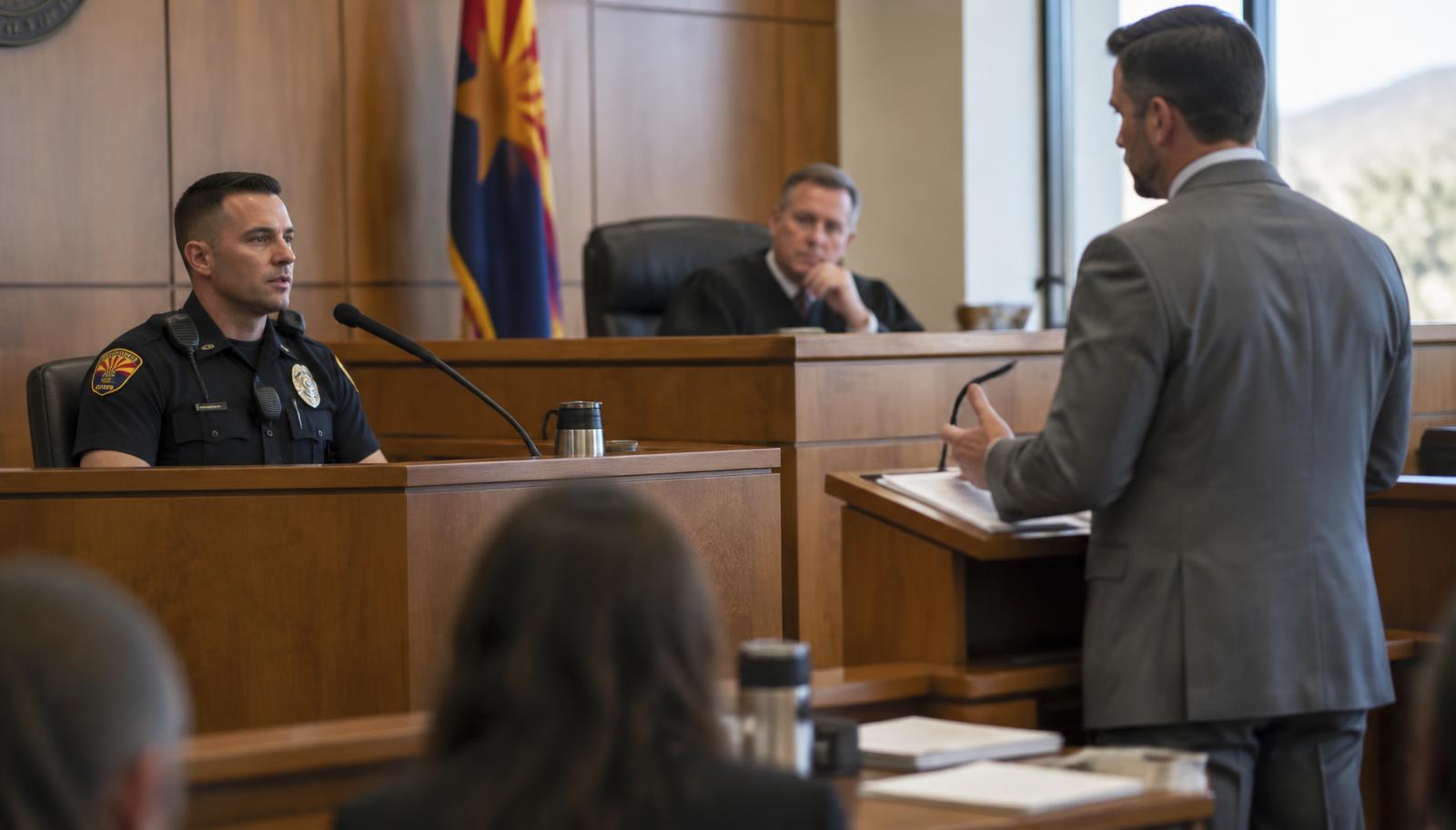
A preliminary hearing is held in open court, usually within about ten days of your initial appearance if you are in custody and about twenty if you are out, unless the time is extended. The prosecutor calls a witness or two, most often the arresting officer. We cross-examine that witness under oath and object to improper evidence. Then the judge rules.
If the judge finds probable cause, the case is bound over to Superior Court. If not, the charge is dismissed, although the state can refile or go to a grand jury. Even when a case is bound over, the hearing helps the defense:
- We hear the state's main witness under oath, months before trial.
- We get a transcript to use if that witness later changes the story.
- Judges sometimes find probable cause on a lesser charge than the one filed.
What happens with a grand jury indictment
The grand jury meets in private. A panel of citizens hears the prosecutor's witnesses, usually a detective summarizing the investigation, and votes on whether to indict. You are not in the room. We are not in the room. There is no cross-examination and no judge weighing the evidence. If the panel finds probable cause, it returns an indictment and you are summoned or arrested on it.
The defense is not powerless. We can ask the prosecutor in writing to tell the panel about evidence that points toward innocence, and after an indictment we can ask the court for a new probable cause finding if the presentation was misleading or incomplete. That motion has a short deadline after arraignment. Federal felonies almost always go through a federal grand jury under its own rules, which our federal criminal defense page explains.
A Phoenix case that turned on one cross-examination
Here is a composite example with details changed. A client was charged with aggravated assault after a parking lot argument in Phoenix, and the prosecutor chose a preliminary hearing. The only witness was the responding officer, who had not seen the fight. On cross-examination he agreed the other man threw the first punch, our client never used a weapon, and the only injury was a split lip. The judge found probable cause only on a misdemeanor count, and the felony never reached Superior Court. At a grand jury, nobody would have asked the officer those questions until much later. Past results do not guarantee future outcomes, and every case turns on its own facts.
The honest counterpoint: sometimes waiving the hearing is smarter
Clients often assume we should fight at every stage. Not always. Prosecutors frequently offer something for waiving the preliminary hearing, such as keeping a plea offer open or agreeing not to add charges. If the evidence is strong and a hearing would only give the state's witness a practice run, waiving can protect you. And if we insist on a hearing the prosecutor does not want, the state can simply go to the grand jury instead. The choice is strategic, and we make it with you after reviewing the police reports.
Talk to a Phoenix criminal defense attorney before your preliminary hearing
The window to use a preliminary hearing well, or to challenge an indictment, is measured in days. Our criminal defense attorneys have decades of experience in Maricopa County courtrooms and represent clients across Phoenix and statewide. A real attorney answers 24/7, consultations are free, we offer payment plans, and our flat fees are explained before you hire us. Se habla español, and we visit clients in jail. Learn more about Your Phoenix Attorney or call 623-335-4014.
Frequently asked questions
Can charges be dismissed at a preliminary hearing?
Yes. If the judge finds no probable cause, the complaint is dismissed. The state can refile or seek an indictment, but a dismissal often changes how the prosecutor values the case.
Do I have to testify at a preliminary hearing or before a grand jury?
No. You have the right to remain silent at both. Testifying before a grand jury is rarely wise because your lawyer cannot be in the room with you.
Can a grand jury indictment be challenged?
Yes, within a short deadline after arraignment. We review the grand jury transcript for misleading testimony, missing exculpatory evidence or wrong legal instructions and can ask for a new probable cause finding.
Need help with this issue?
Call Your Phoenix Attorney at 623-335-4014 for a free consultation, or use the contact form.
About Your Phoenix Attorney
Aggressive Arizona criminal defense — Phoenix, Scottsdale, Mesa, Tucson & statewide.
- Address:
- 2999 N. 44th St., STE. 888, Phoenix, AZ 85018
- Phone:
- 623-335-4014
Find us around the web