
By Your Phoenix Attorney •
Can You Be Charged With Attempting a Crime in Arizona?
The short answer
Yes, and an attempt charge in Arizona means the state says you intended to commit a crime and took a step toward it, even though the crime never happened. Under A.R.S. 13-1001, attempt is generally classified one level below the offense you were accused of trying to commit, so an attempted class 4 felony is charged as a class 5 felony, and an attempted class 6 felony becomes a class 1 misdemeanor. That one-step drop matters, but so does the fact that you can be convicted of a felony for something that was never completed. Here is how attempt charges work and where the defenses are.
What the state has to prove
Two things, both beyond a reasonable doubt. First, that you intended to commit a specific offense. Not that you were angry or in the wrong place, but that you meant to commit that crime. Second, that you took a step in a course of conduct planned to end in that crime. Arizona's statute says any step, which is broader than the substantial step test used in many other states, and prosecutors lean on that word.
Broad does not mean unlimited. Talking about a crime, searching for something online, or standing near a location is not automatically a step toward committing it. The state has to connect the conduct to a plan, and attempt cases turn on exactly that connection.
Attempt, facilitation and conspiracy are not the same thing
People use these words interchangeably. The law does not.
- Attempt: you intended the crime and took a step toward it yourself.
- Conspiracy: you agreed with at least one other person to commit a crime, and someone took a step.
- Facilitation: you knowingly gave someone else the means or opportunity to commit a crime, without joining the plan or wanting it to succeed.
Facilitation drops the classification much further than attempt does. A facilitated class 2 or 3 felony is charged as a class 6 felony, and a facilitated class 4 or 5 felony becomes a class 1 misdemeanor. That is why facilitation is often where a helper's case ends up after negotiation, and why the prosecutor's opening label is worth fighting over.
The defenses that actually work
Attempt cases have a few pressure points. The first is intent: ambiguous conduct, intoxication, or an innocent explanation for the same behavior can leave the state unable to prove you meant to commit that particular crime. The second is the step itself: separating talk, research or presence from an actual move toward the offense. The third is renunciation under A.R.S. 13-1005, which applies when you voluntarily and completely abandoned the plan and either warned police or made a real effort to stop the crime. It is narrow, and backing out because you feared getting caught does not qualify. Finally, many attempt cases come out of sting operations, where the reliability of recordings and who proposed what first become central.
An anonymized example
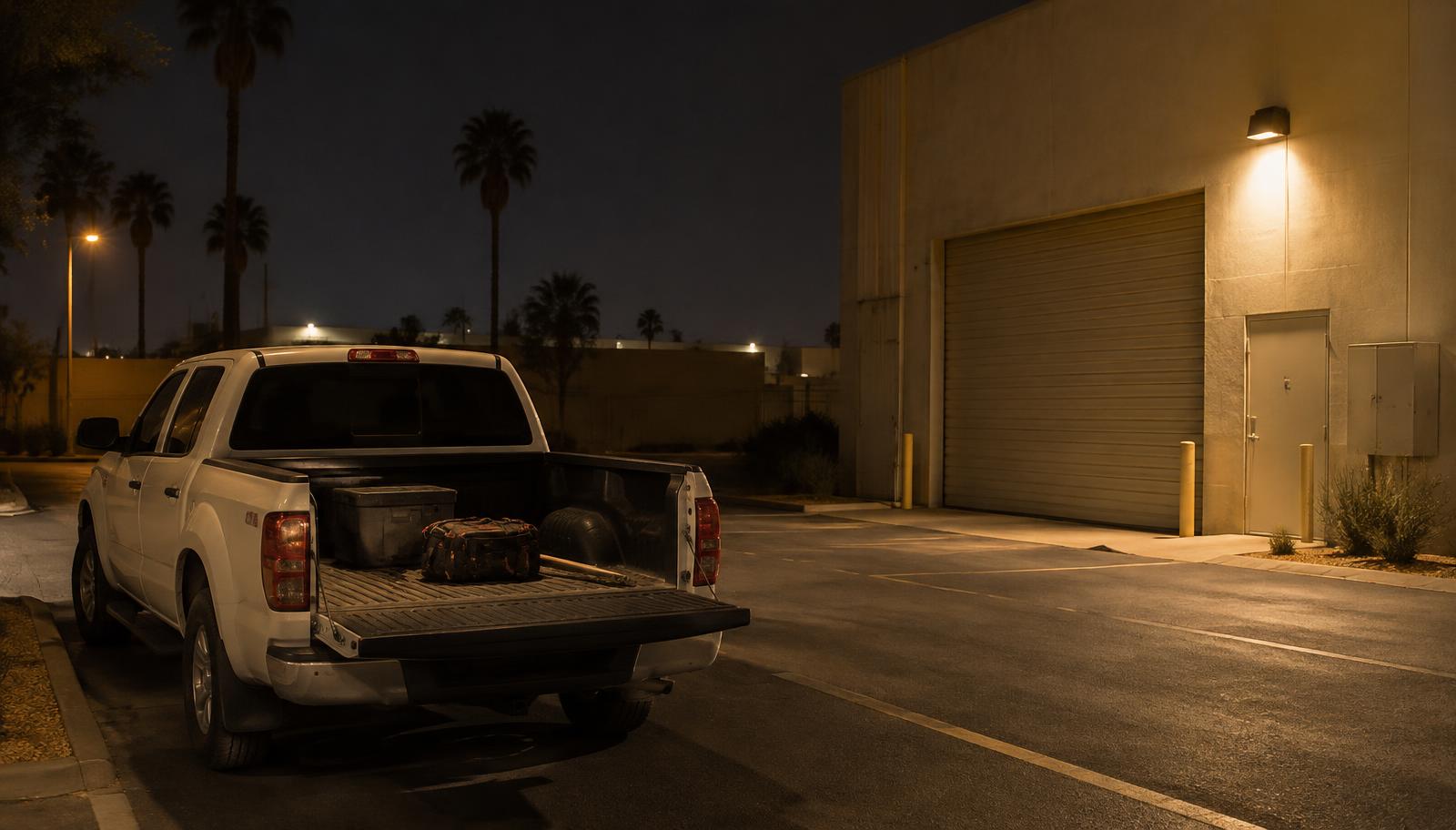
Consider a West Valley man accused of attempted burglary after he was found in a commercial parking lot at night with a pry bar in his truck. The state's theory was that the tool plus the location equaled a step toward breaking in. Nothing had been touched. A defense built on intent, pointing to his trade, the tools he carried every day, and the lack of any movement toward a door, created the kind of doubt that changes how a prosecutor values a case. The details are generic and composite, and past results do not guarantee future outcomes, but the pattern is common: the state's step is often an inference, and inferences can be challenged.
The honest counterpoint: an attempt charge is not a lesser problem
Some people hear attempt and relax, assuming it is a slap on the wrist because nothing happened. That is a mistake. An attempted class 2 felony is still a class 3 felony with prison exposure. Certain offenses carry their own attempt sentencing rules that do not follow the one-class drop. And an attempt conviction is a conviction, with the same consequences for your job, your license and your record. The one-class reduction is a tool for your lawyer in negotiation, often paired with the arguments we covered in can a felony be reduced to a misdemeanor in Arizona. It is not a reason to take the charge lightly.
Facing an attempt charge in Arizona? Call Your Phoenix Attorney
Our criminal defense team has decades of experience with attempt, facilitation and conspiracy cases across Arizona. Consultations are free, a real attorney answers 24/7, and we speak Spanish. If you have been arrested or contacted by police about an attempt charge, call 623-335-4014 before you say anything else, or visit Your Phoenix Attorney.
Frequently asked questions
Is attempt a felony in Arizona?
It depends on the underlying offense. Attempt is generally charged one class below the crime attempted. An attempted class 2, 3, 4 or 5 felony is still a felony. An attempted class 6 felony is charged as a class 1 misdemeanor, and an attempted misdemeanor drops one misdemeanor class.
Can I be charged with attempt if the crime was impossible to complete?
Generally yes. Arizona law does not let you avoid an attempt charge because the facts made the crime impossible, such as the drugs in a planned purchase turning out to be fake. The question is what you intended and whether you took a step.
What if I changed my mind and walked away?
Arizona recognizes a renunciation defense under A.R.S. 13-1005, but it is narrow. You must have voluntarily and completely abandoned the plan and either notified police or made a substantial effort to prevent the crime. Quitting because the risk of getting caught went up does not count. Talk to a lawyer before assuming it applies.
Need help with this issue?
Call Your Phoenix Attorney at 623-335-4014 for a free consultation, or use the contact form.
About Your Phoenix Attorney
Aggressive Arizona criminal defense — Phoenix, Scottsdale, Mesa, Tucson & statewide.
- Address:
- 2999 N. 44th St., STE. 888, Phoenix, AZ 85018
- Phone:
- 623-335-4014
Find us around the web