
By Your Phoenix Attorney • 2026-08-21
Can Domestic Violence Charges Be Dropped in Arizona If the Victim Doesn't Want to Press Charges?
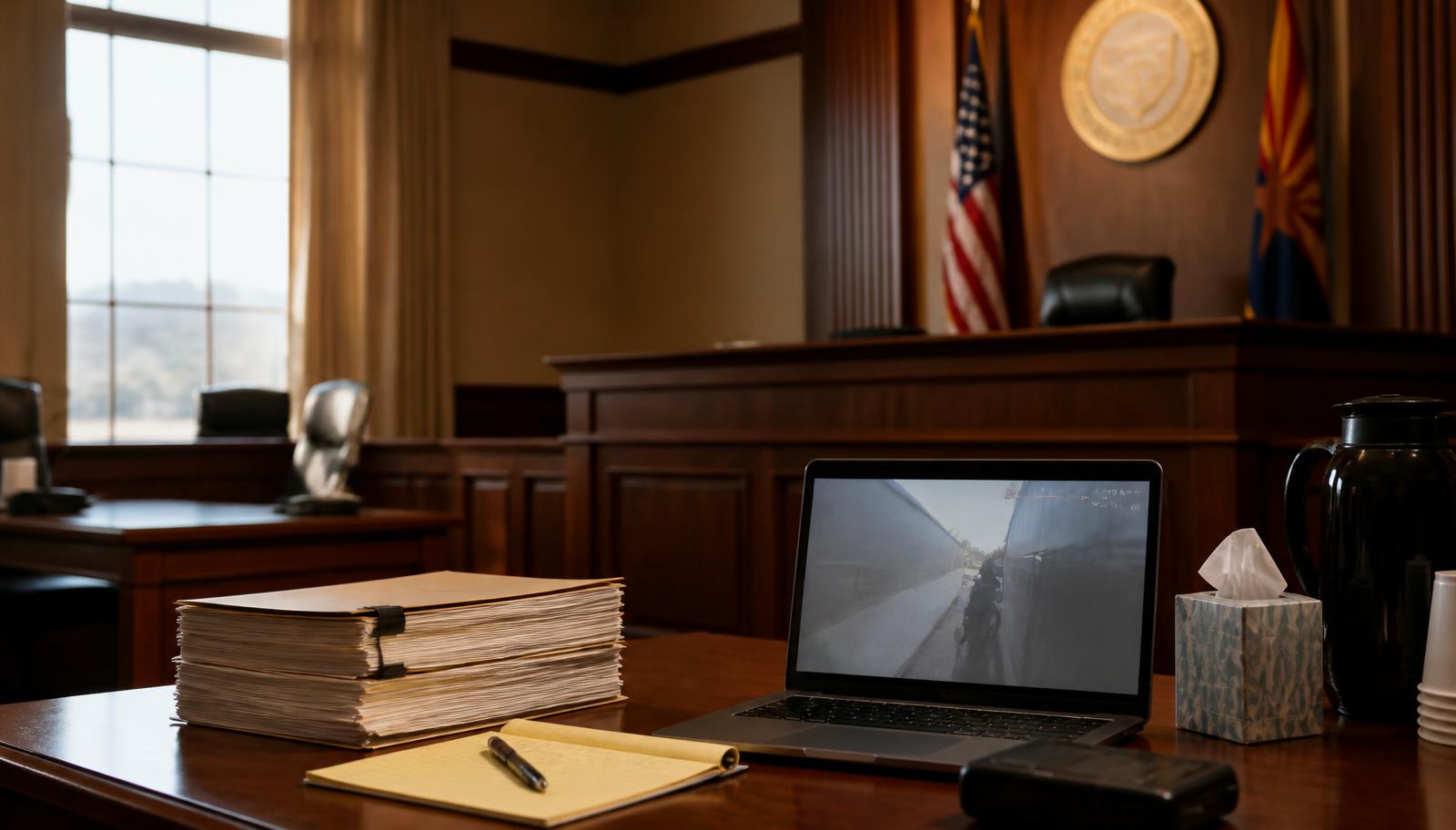
People ask us every week whether domestic violence charges can be dropped in Arizona when the alleged victim changes their mind. The alleged victim does not control the case. A city or county prosecutor decides whether to file charges and whether to dismiss them. A request from the victim is one thing the prosecutor may consider, but it does not end the case by itself.
We know that is not the answer families want. We have had this conversation in living rooms, in courthouse hallways, and in jail visiting rooms for decades. Here is how it actually works.
Can Domestic Violence Charges Be Dropped in Arizona by the Victim?
No. The case is not brought by the person who called 911. It is brought by the State of Arizona, or by a city on behalf of the State. The alleged victim is a witness, not a party. That is why a victim cannot call the court and cancel a case.
Arizona also takes a strong response posture on domestic violence calls. When officers see signs of an assault, an arrest often follows on the spot. Prosecutors then often move forward without the victim's help, using 911 audio, body-camera footage, photographs, medical records, and statements made in the moment that may come in as excited utterances. We cover how these cases get built and defended in our post on domestic violence charges in Arizona.
What the Arizona Victims' Bill of Rights Actually Gives a Victim
Arizona gives crime victims real rights, and we take them seriously. But they are not the same as control over the case.
- The right to be heard at important stages of the case.
- The right to confer with the prosecutor handling the matter.
- The right to submit a written statement and ask that the case be dismissed.
- The right to decline a defense interview.
- The right to notice of hearings and of the outcome.
So a victim can tell the prosecutor they do not want the case pursued. Prosecutors do read those statements, and in some cases that input carries real weight. It is weighed alongside the strength of the evidence, injuries, prior history, and office policy. The prosecutor is not bound by the request.
| What the victim can do | What it actually accomplishes |
|---|---|
| Ask the court to cancel the case | Nothing — the court has no power to drop a charge on a witness's request |
| Confer with the prosecutor | Their input is heard and weighed against the evidence and history |
| Submit a written statement asking for dismissal | May influence the prosecutor's decision; it is not binding |
| Decline a defense interview | A protected right; it does not stop the prosecution |
| Refuse to testify | Case often proceeds on recorded evidence; a subpoenaed witness may face consequences |
Recanting Is Not a Shortcut, and It Carries Real Risk
Sometimes a victim decides to change their story. It often does not stop the case. Prosecutors expect it and frequently proceed using the recorded evidence already in the file. A jury may hear both versions and be asked which one to believe.
There is risk on the other side too. Someone who tells police one thing and says the opposite later can face hard questions about false reporting. Neither party should try to influence the other's testimony. And do not reach out to the protected party, or have a friend do it for you. If a release condition or an order of protection says no contact, a text, a social media message, or a ride home can become a new criminal charge.
What a Defense Attorney Can Actually Do Instead
Waiting is not a plan. Building the file is. Depending on the facts, this is the work that moves a case.
- Get the evidence early: body-camera video, 911 audio, photos, medical records, and the full report.
- Test that evidence for gaps, timeline problems, inconsistencies, and self-defense issues.
- File motions where the law supports them.
- Present mitigation, such as counseling already started, work history, and family circumstances.
- Explore diversion or domestic violence offender treatment programs where they are offered.
- Negotiate toward an amended charge that may avoid the domestic violence designation.
None of that comes with a promise. Every path depends on the facts, the court, the prosecutor's office, and your record. What we can say is that cases where someone got involved early tend to have more options. You can read more on our Arizona domestic violence defense page or our criminal defense page.
A Typical Situation, Anonymized
Here is a composite of something we see often, with no identifying details. A client is charged with misdemeanor assault with a domestic violence designation in a Maricopa County justice court. The next morning the alleged victim calls the prosecutor's office and says they do not want to move forward. The client assumes the case is over and stops answering the phone.
The case was not over. The prosecutor had photos and body-camera video. The client missed a court date, and now there was a warrant to handle before anyone could talk about the charge itself. The lesson is that the phone call ended nothing, and the silence made things harder. Past results do not guarantee future outcomes.
Why Waiting for It to Go Away Costs the Most
We will be honest with you. An early dismissal is not the typical path. It happens in some cases, usually where the evidence is genuinely thin, but it is not what most people should plan around. The realistic paths are a negotiated resolution, a diversion or treatment program where one is available, or a contested hearing or trial. Each takes preparation, and preparation takes time.
Meanwhile the clock runs. Missing court can lead to a warrant. Release conditions and contact restrictions stay in place. In Arizona, domestic violence is generally a designation attached to another offense, such as assault or disorderly conduct, rather than a standalone crime. That designation can mean mandatory counseling, and under federal law a qualifying misdemeanor domestic violence conviction can restrict firearm rights. Some records may later be eligible for relief, which is why we also handle set asides and record sealing, though eligibility depends on the offense and your history.
Talk to an Arizona Defense Attorney Today
If you are asking whether domestic violence charges can be dropped in Arizona, the useful next step is a conversation about your specific facts. Call us at 623-335-4014. Consultations are free. We answer 24 hours a day, and you get a real attorney, not a call center. We offer payment plans and transparent flat fees. Spanish-speaking help is available, and we will visit you in jail. You can also reach us through the contact page or read more about our Arizona firm.
Frequently asked questions
Can the victim call the court and cancel a domestic violence case?
No. The court does not remove a charge because a witness asks. Both the charging decision and the dismissal decision belong to the prosecutor's office. A victim can contact that office, ask to confer, and submit a statement. That input may be considered. Whether it changes anything depends on the evidence, the history between the parties, and office policy.
What happens if the victim refuses to testify?
The case does not automatically end. Prosecutors often proceed with 911 recordings, body-camera footage, photographs, and statements that may be admitted under exceptions to the hearsay rules. There can also be consequences for a witness who is properly subpoenaed and does not appear. Anyone in that position should get their own legal advice first.
Is it okay to talk if we have worked things out?
Not if a court order or release condition says no contact. Those orders stay in force until a judge changes them, even when both people want to talk. Violating one can be charged as a new offense. If circumstances have changed, there is a lawful process for asking a court to modify contact conditions. Talk to a lawyer before making any contact.
Need help with an Arizona domestic violence charge? Call Your Phoenix Attorney at 623-335-4014 for a free consultation. We serve Phoenix, Scottsdale, Mesa, Gilbert, Glendale, Tucson and Paradise Valley — statewide Arizona.
This article is for general information only and is not legal advice. Every case turns on its specific facts. Speak with a licensed Arizona attorney about your situation.
Need help with this issue?
Call Your Phoenix Attorney at 623-335-4014 for a free consultation, or use the contact form.
About Your Phoenix Attorney
Aggressive Arizona criminal defense — Phoenix, Scottsdale, Mesa, Tucson & statewide.
- Address:
- 2999 N. 44th St., STE. 888, Phoenix, AZ 85018
- Phone:
- 623-335-4014
Find us around the web